Look
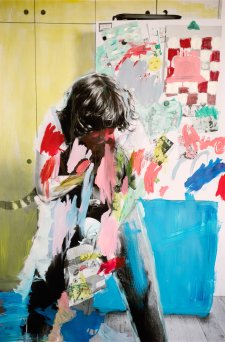
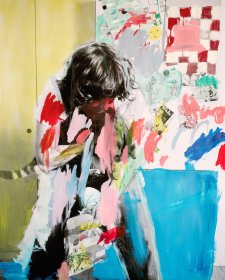
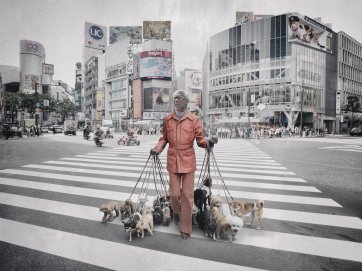
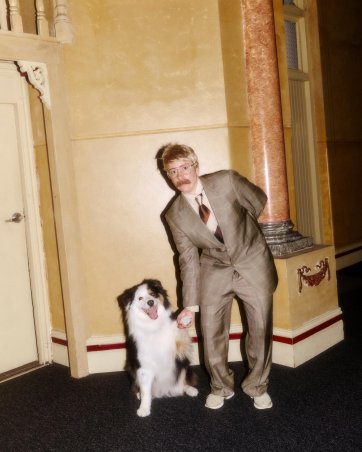
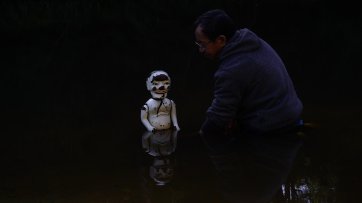
- Invite students to use drawing and writing as a way of looking closely at the portraits.
- Ask students to create a ‘stream of consciousness’ on paper, by drawing and/or writing everything that comes to mind as they look at a single portrait for two minutes.
- Encourage students to record visual details, observations, thoughts and feelings freely, without worrying about structure, spelling or being ‘right’.
Discuss
- Invite students to discuss their observations with a partner.
- Ask students to consider what story is being told in their chosen portrait.
Discussion prompts:
- What is happening in the photograph? What can you see that makes you think that?
- Who is the subject? What is their story?
- How does this portrait spark curiosity? What questions do you have?
- Imagine stepping into the photograph. How might the subject react? What would you ask them?
Connect
- Invite students to investigate one portrait more deeply through research.
- Ask students to consider how the artist explores imagination through the portrait and their practice more broadly.
- Encourage them to start by reading the artists’ statements before researching further.
Inquiry prompts:
- How has the artist explored characters and personas in their portrait?
- How does the artist explore alternative stories, perspectives, realities and identities through their practice?
- Is a photograph always factual?
- Does the artist’s intention for the portrait differ from your interpretation? Is it ok for artworks to be interpreted differently by the artist and viewers?
- Have you ever imagined yourself through a different persona or identity? How does that relate to the portrait?
Create
- Invite students to explore their imagination and consider different possibilities through a creative exercise.
- Ask each student to bring an ambiguous or unusual object from home and display the objects throughout the classroom.
- Encourage students to choose one object to focus on while working through the prompts below.
Creative prompts:
- Look at the object carefully. Pick it up and hold it in your hands. What does it remind you of? Write down your ideas.
- Close your eyes and draw the object from memory. What elements did you remember first? What details did you forget?
- Photograph the object and make 10 copies of the image (digital or printed). Manipulate the images to transform the object into 10 different versions with new meanings. Extend, distort, remove or add elements to change the object.