
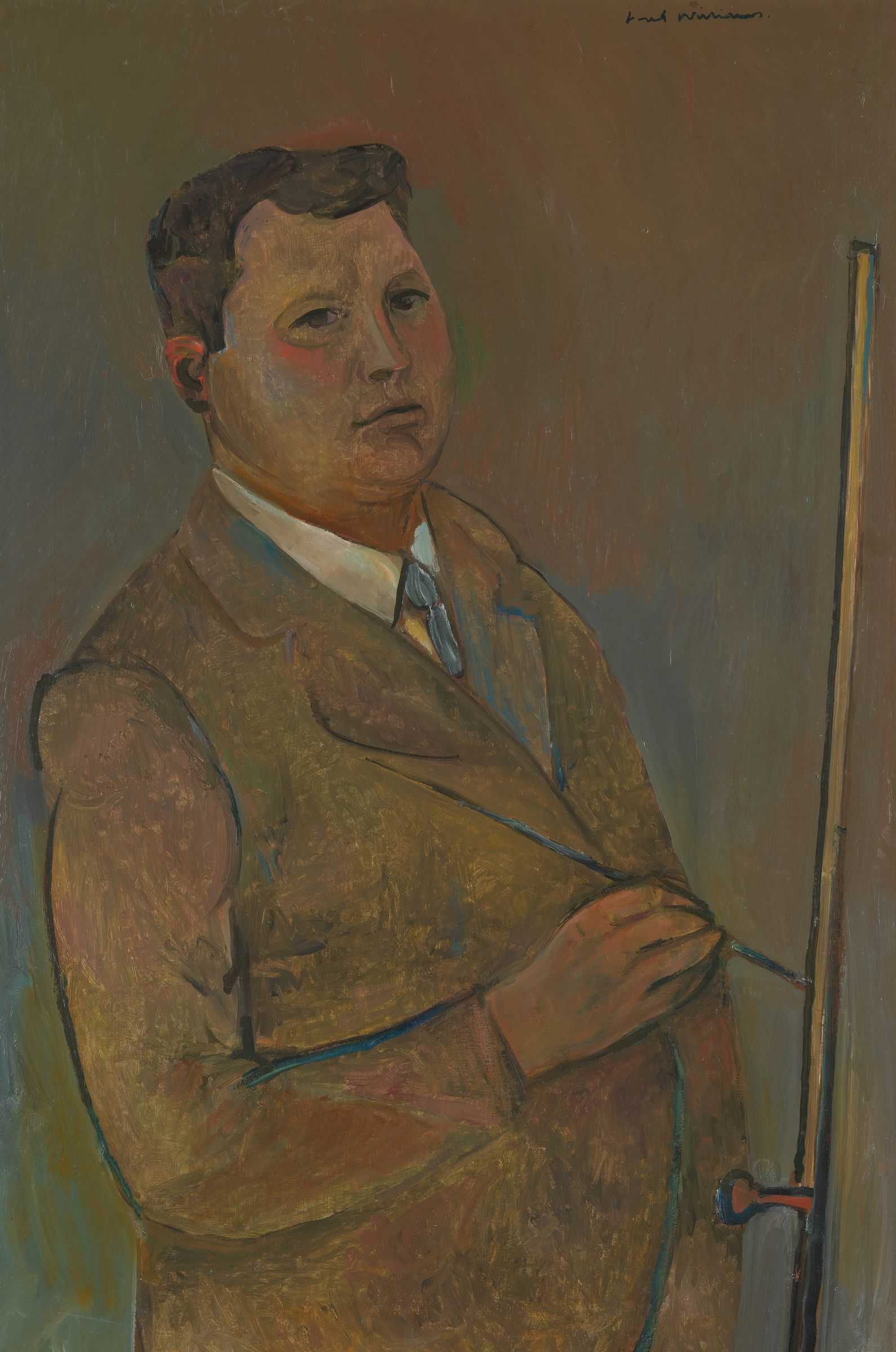
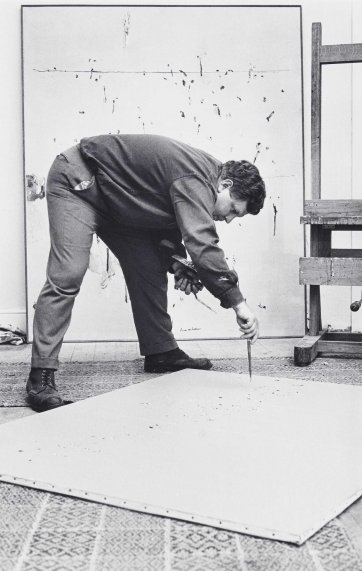
Fred Williams OBE was one of Australia’s most important 20th-century artists, renowned for his bare, minimalist paintings of the Australian landscape. After returning from several years studying and working in London in the late 1950s, Williams developed a distinctive way of depicting the Australian bush. By the end of the 1960s, he was reducing trees, rocks and other features of the landscape to small marks of paint scattered across broad fields of colour, evoking the vast scale and openness of the land.
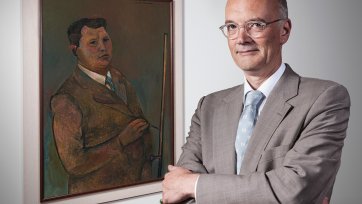
Williams’ portraits are not as well known as his landscapes, but are no less compelling. This painting, one of the National Portrait Gallery’s earliest acquisitions, was the last and most considered of his self portraits. Rather than presenting himself as a tousle-haired, tortured genius, he appears as a diffident, sober painter quietly absorbed in his practice. The broad handling of the jacket recalls the rocks and trees of his landscapes from the same period, while restrained touches of vibrant colour on the cheekbones and ears bring the portrait to life.
Gift of Lyn Williams 1998. Donated through the Australian Government’s Cultural Gifts Program.
© Fred Williams
Fred Williams (age 33 in 1960)
Lyn Williams (4 portraits)
On one level The Companion talks about the most famous and frontline Australians, but on another it tells us about ourselves.
1 May 2014
In Persuasion (1818), a long walk on a fine autumn day affords Anne Elliot an opportunity to ruminate wistfully and at great length upon declining happiness, youth and hope.
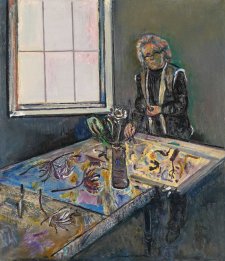
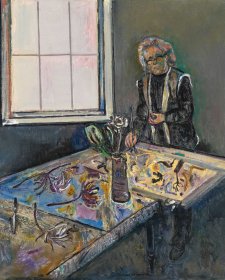
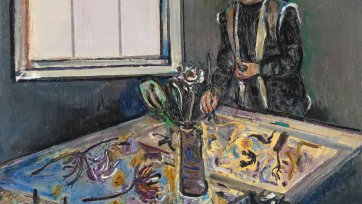
Michael Desmond discusses Fred Williams' portraits of friends, artist Clifton Pugh, David Aspden and writer Stephen Murray-Smith, and the stylistic connections between his portraits and landscapes.