Menu

The National Portrait Gallery acknowledges the Traditional Custodians of Country throughout Australia and recognises the continuing connection to lands, waters and communities. We pay our respect to Aboriginal and Torres Strait Islander cultures and to Elders both past and present.

Aboriginal and Torres Strait Islander viewers are warned that this website contains images of deceased persons.

Process

Explore how process becomes part of a portrait’s story.

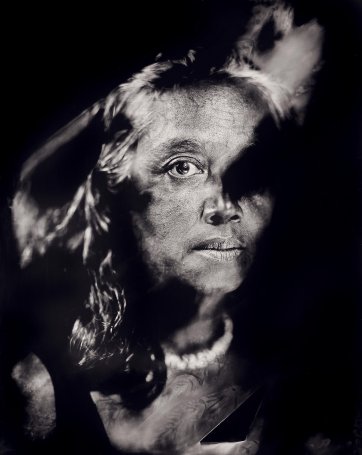
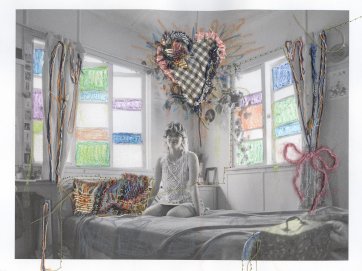
Teacher tip: click here to download images of the portraits, or click on the images below to read artist statements from the photographers.

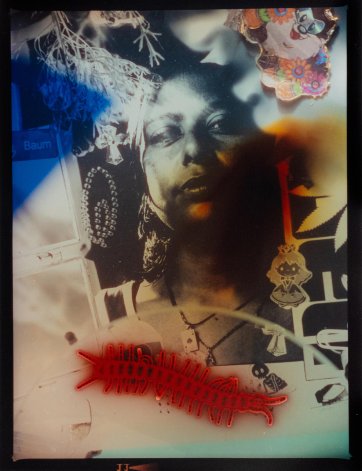
1 Aida Azin, 2024 Emmaline Zanelli. 2 Muni, 2024 Raoul Slater. 3 Anna (Home for a Time), 2024 (Nur) Aishah Kenton, Anna Jourdant.

Look

  • Invite students to spend time carefully observing one portrait in groups.
  • Ask students to look at the portrait for at least one minute and note the colours, shapes and lines they can see.

Discuss

  • Invite students to work in small groups looking closely at a single work. What can they see and how does this reveal the process of making the photograph?
  • View these portraits side-by-side. Have a whole class discussion sharing observations.

Discussion prompts:

  • In (Nur) Aishah Kenton and Anna Jourdant’s Anna (Home for a Time) and Emmaline Zanelli’s Aida Azin there are multiple added layers. How do these layers help tell the story of the subject?
  • Are there any visual similarities or differences?
  • How does texture, colour, light and clarity shift across a single portrait?
  • How would you describe the mood of these portraits? Does the way it is made effect the mood?

Connect

  • Invite students to explore the processes used by each artist to create their work.
  • Encourage them to start by reading the artists’ statements before researching specific photographic processes such as the box camera, wet plate collodion, photogram and mixed media photography.
  • Students could create a short video explaining one of the photographic techniques.

Inquiry prompts:

  • What is the history of your chosen photographic process? What impact has it had on photography?
  • Why are older photographic techniques still relevant today?
  • How does collaboration become part of the process?

Create

  • Invite students to work in pairs to create a photographic portrait of each other.
  • Encourage students to experiment with different photographic techniques and consider how they will collaborate with their subject throughout the process.

Creative prompts:

  • How can you combine multiple photographic techniques?
  • How will you collaborate with your subject to tell their story?
© National Portrait Gallery 2026
King Edward Terrace, Parkes
Canberra, ACT 2600, Australia

Phone +61 2 6102 7000
ABN: 54 74 277 1196

The National Portrait Gallery acknowledges the Traditional Custodians of Country throughout Australia and recognises the continuing connection to lands, waters and communities. We pay our respect to Aboriginal and Torres Strait Islander cultures and to Elders past and present. We respectfully advise that this site includes works by, images of, names of, voices of and references to deceased people.

This website comprises and contains copyrighted materials and works. Copyright in all materials and/or works comprising or contained within this website remains with the National Portrait Gallery and other copyright owners as specified.

The National Portrait Gallery respects the artistic and intellectual property rights of others. The use of images of works of art reproduced on this website and all other content may be restricted under the Australian Copyright Act 1968 (Cth). Requests for a reproduction of a work of art or other content can be made through a Reproduction request. For further information please contact NPG Copyright.

The National Portrait Gallery is an Australian Government Agency