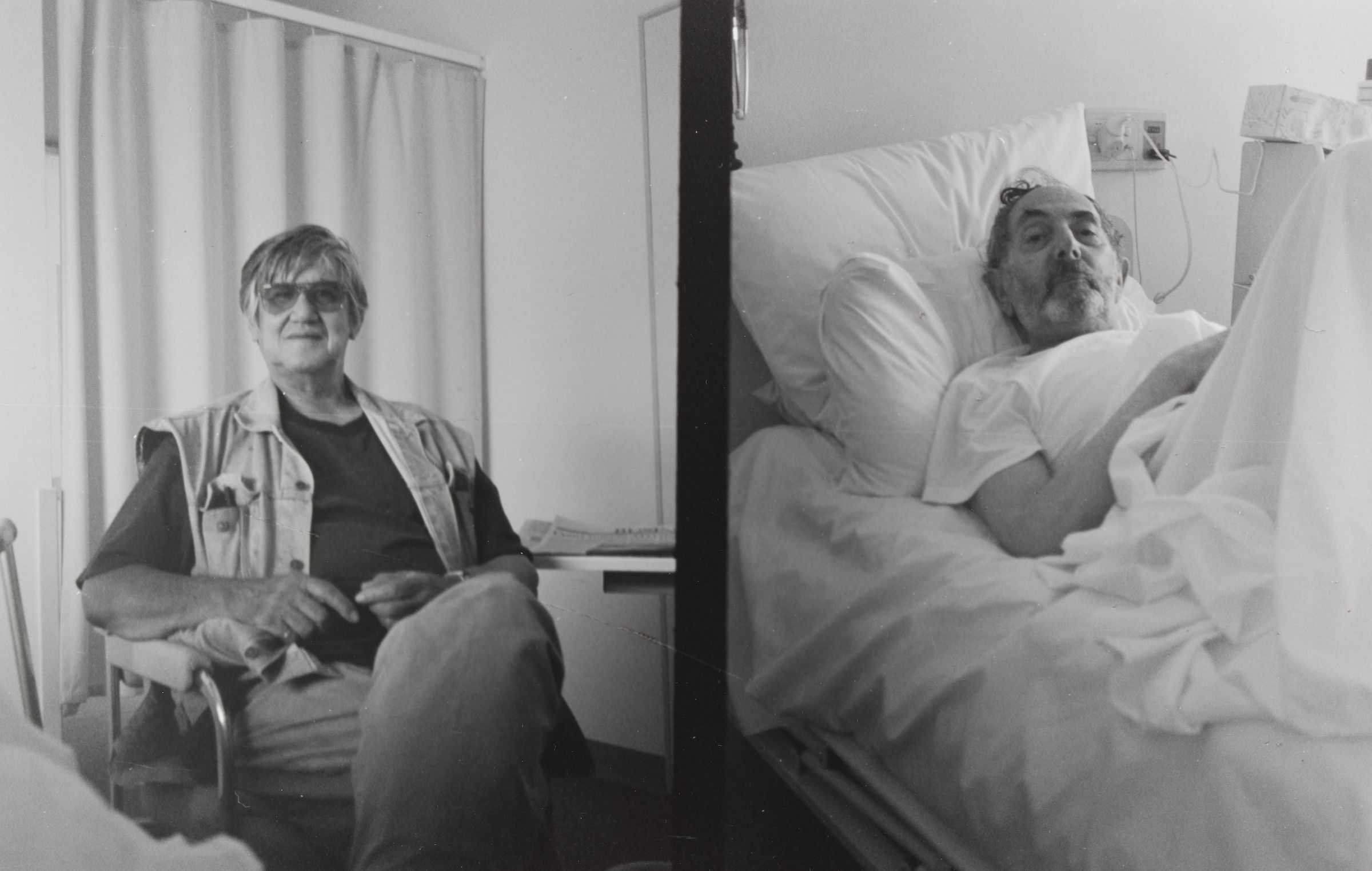
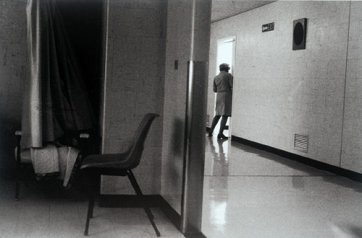
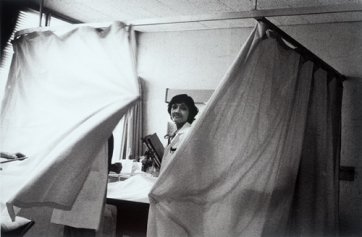
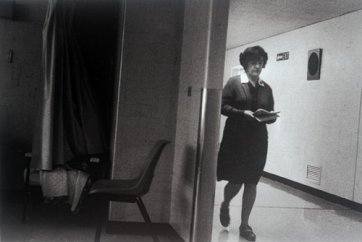
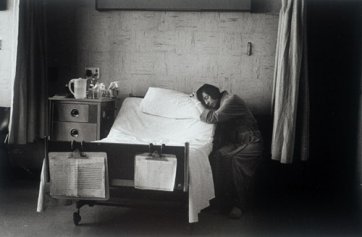
This exhibition brings together photographs that deal with the last phase of people's lives. Many of the photographs - by photographers from Australia and New Zealand - have not been exhibited before. The time span is from the late 1970s up to the present day, coinciding with what is sometimes known as the 'death awareness movement'. This emerged to counter what French historian Philippe Ariès terms 'the modern death' that is characterized by an ever-increasing amount of medical and technological intervention.
Reveries is concerned with death of self, death of other, and reflections on mortality prompted by one's own direct experiences, such as serious illness or the death of a loved one. The emphasis throughout is on states of heightened awareness and consciousness of mortality and therefore with natural death rather than violent or accidental death.
While acknowledging at the outset that each death represents the life of an individual and the sum of a unique set of experiences, the aim has been to consider the preoccupations and patterns that emerge from the photographs as a group. What is astounding is how many connections there are.
The first of these involves the abundance of imagery sourced from the natural world - as in the work of Max Dupain and Olive Cotton. Theirs are 'old age' photographs in which death was anticipated rather than imminent, based on the recognition that, as Dupain said of his own late work: 'there's not much longer to go'.
Cotton took an expansive view in her last photographs, tilting her camera upwards so that the sky becomes dominant and an effect of spaciousness is achieved. These images have a number of obvious symbolic and metaphoric associations - a vapour trail is suggestive of the transience of life while a soaring birdalludes to freedom and regeneration.
Cloud, 2000 was the last major series produced by indigenous artist Michael Riley before his premature death from kidney disease. It draws from Riley's own experiences of country and big skies, especially in the area around Dubbo where his father came from. Riley's digitally manipulated images are condensed to the simplest, purest elements and unite such intangible realities as childhood memory and social and spiritual worlds. But ultimately what is most memorable about Cloud is its ethereal presence and charged spiritual quality.
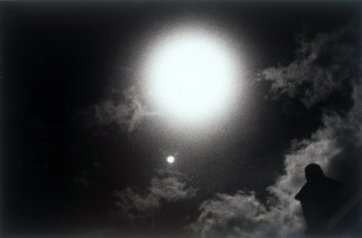
One of David Moore's last completed works was Moon writing, an assemblage of six photographs of the moon. This represented a departure for Moore in the fluidity of the forms and patterns he created and the degree of ambiguity attained. The proof sheet for the last negatives he shot (but never printed), includes wonderfully romantic images of the moon in a swirling cloud-filled sky.
These images of the natural world, especially of the sky and moon, create a space that is not 'earthbound', that is neither determined by nor governed by the material and mundane aspects of everyday life. This otherworldly space is attained through a common means - solitude and intense contemplation. The vision espoused in these last photographs is selfless as well, in recognition of the insignificance of humans in the natural scheme.
Domestic imagery is also predominant in Reveries reiterating the importance of 'home' in its most specific, personal terms.
In her series The beginning of absence, Ruth Maddison compiled an elegiac catalogue of the things in her parent's home with which her seriously ill father was most closely associated. The tender light-infused dance of presence and absence in Maddison's photographs stems from the recognition of her father's mortality.
A few months before he died Max Dupain photographed the corners of different rooms in his home at Castlecrag and the personal mementoes that had been accumulated over a lifetime.
The domestic realm is also the site of the familial, an emotional field in which intimate relationships are conducted. This has a direct bearing on another significant feature of the photographs in the exhibition - the role of direct experience and autobiographical narrative as a starting point for the photographers' reflections.
When Anne Noble's father died suddenly from a heart attack his family was faced with a dilemma. Everyone was expected home for Christmas celebrations that were only a few days away - should they be asked to come early? Or should they wait and hold the funeral when everyone had arrived as planned? The decision was made to wait.
And so Anne Noble's father remained at home where life continued around him. The photographs Noble took throughout the week eventually found their way into the installation In my father's garden which combines still photographs, fold-out books of photographs and colour video images taken in the funeral home.
The momentous event of Noble's father's death is integrated into ordinary life. The physical qualities of the family home and her father's things are highlighted and Noble also gently underlines the everyday familial relationships of which her father had been a vital part.
This brings me to the work of another New Zealander, Craig Potton. Known primarily as an environmental photographer Potton also frequently photographed his wife Beverly; when she became ill with a terminal form of cancer in 2001 they decided to continue their collaboration until the end of her life.
The photographs of Beverly are informed by the rich tradition of photographing the beloved but they are also embedded within the familial and domestic realm.
Potton's series is based not simply on the incontrovertible truth that Beverly is dying but that she - and he - knows that this is so. This knowledge is made more real through his use of a very direct, unembellished style; colour is also important because of its associations with the everyday. Craig Potton's photographs of Beverly come from photography's deepest core, the desire to create a totally faithful trace of the subject, an imprint that will last forever. Everything of consequence is believed unquestionably to be right there inside each image.
The importance of human touch and gesture is underlined in many of the photographs in the exhibition - as can be seen in Jack Picone's series on Andrew Knox, which is part of a global project dealing with the impact of HIV/AIDS, and in William Yang's acclaimed photographs of his friend Allan that belong to his larger work Sadness.
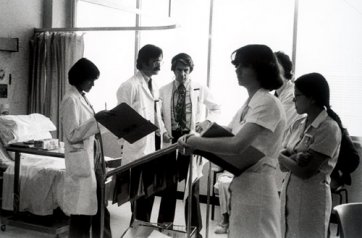
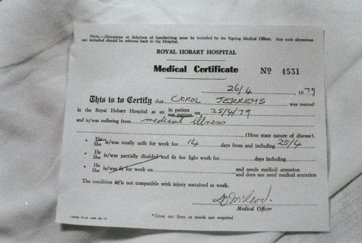
Other recurring patterns in Reveries include the use of metaphor as a means of creating an open-ended visual language, and 'doubling' or 'pairing'. In the latter, two different states of being - such as dark and light, inside and outside, self and other - are brought together, gaining meaning from the interaction in which each assumes equal value. Then there is the bright, white light that has an insistent presence in photographs by Carol Jerrems, Ruth Maddison and others. This particular kind of light can be understood, I think, as an apprehension of death.
Finally, Reveries includes many images that simultaneously test the limits of representation and portraiture. One of these is Anne Ferran's Dad Passing Over Wheeny Creek, 2006. Ferran wished to record the scattering of her father's ashes for her sister who could not be present at the ceremony but Ferran came away with something ultimately more profound than that. Her last portrait of her father is a trail of light that evokes a human form, head gently bowed, arm held protectively across the chest.
The photographers in Reveries don't belong to any school or group but their work can be seen as part of an ongoing challenge to a society often characterized as 'death denying'. Their photographs offer alternative points of view based loosely on a unitary philosophy - or secular humanism - that aims to reintegrate life and death.
Guest curator Helen Ennis is a Senior Lecturer and Associate Head at the ANU School of Art. She curated Mirror with a memory: Portrait Photography in Australia for the National Portrait Gallery in 2000.
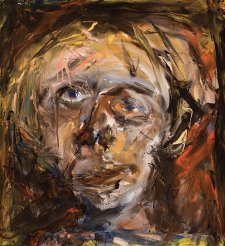
![[Self-portrait], 1996](/files/5/e/2/e/i2030-th.jpg "[Self-portrait], 1996")
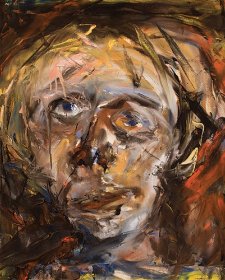
![[Self-portrait], 1996](/files/5/e/2/e/i2030-sl.jpg "[Self-portrait], 1996")
![[Self-portrait], 1996](/files/5/e/2/e/i2030-slt.jpg "[Self-portrait], 1996")
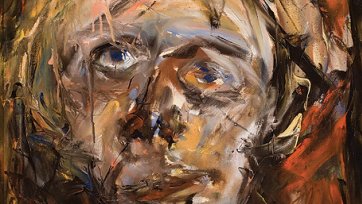
![[Self-portrait], 1996](/files/5/e/2/e/i2030-slq.jpg "[Self-portrait], 1996")
![[Self-portrait], 1996](/files/5/e/2/e/i2030-ths.jpg "[Self-portrait], 1996")