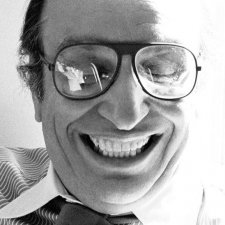
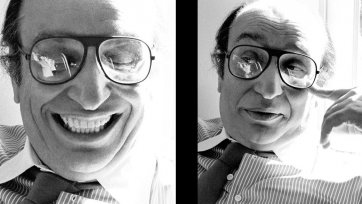
When Melbourne-based photographer Rennie Ellis died in August 2003, Australia lost one of its most prolific and gifted social documenters. Over three decades, the gregarious Ellis attempted to capture the broad character of Australia. He published 17 books of photographs of all kinds of Australians - its social elites, opinion makers and highfliers, its well-known as well as its everyday figures - going about their lives, embracing the pleasures of the beach, the races, parties, street life, music and sport. The National Portrait Gallery exhibition Aussies All is the first exhibition of Ellis's work since his untimely death. Ellis was drawn to people who loved life; he embraced the spirit of his subjects and captured their qualities with characteristic wit. Such was his personality, it was reported that more than a thousand people attended his funeral. Many of these friends and associates are pictured in Aussies All. Distilled from an estimated 500,000 images in Melbourne's Rennie Ellis Photographic Archive, it celebrates Ellis's life and talent through more than 100 portrait images from the late 1960s up to 2003.
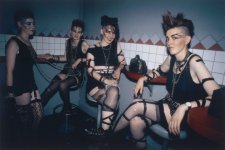
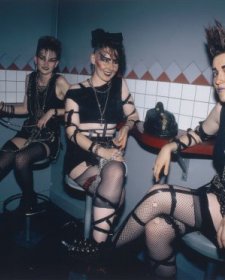
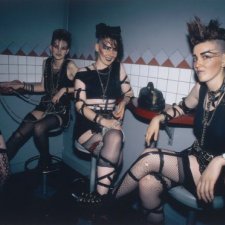
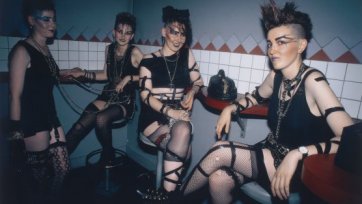
Sharpies, Melbourne 1973Born in 1940, Reynolds Mark 'Rennie' Ellis grew up in the bay side suburb of Brighton, Victoria. At Brighton Grammar school he demonstrated a strong interest in the humanities, excelled at football and was a star swimmer. He gained a scholarship to Melbourne University, but yearned for something more creative than undergraduate study. In 1959, at the age of 18, he scored a job as an office boy at the advertising firm Orr-Skate and Associates. After four years he was writing scripts, producing television commercials and becoming increasingly interested in the photography he saw in the magazines coming through the office.
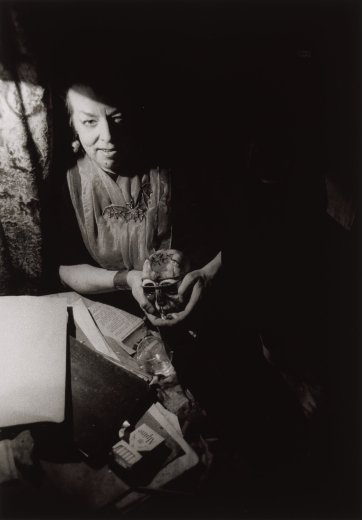
Lillian Frank, Melbourne 1994 (at her home, taken for opening of Casino)According to his cousin, Melbourne photographer Robert Ashton, Ellis was a man who would rather buy a plane ticket to Rio than fix his car; 'it was the Carnivale over the carburettor any day.' He left Australia in 1963 with a surf board and a camera, hitching through the USA and wending his way through Europe. In Paris in 1964, when he was living under the Pont Louis Philippe with a miscellaneous bunch of 'beats', he met Australian artist Fred Williams, there on a Helena Rubinstein Art Scholarship. A musician friend in common introduced Ellis to Williams, who invited his young compatriot for coffee and a snack in a St. Michel cafe. Identified as a bridge dweller, Ellis was refused service. He was embarrassed for Williams, and rose to leave, but declaring that 'either they serve us all or none of us,' the painter led the way to the door and a friendlier cafe. 'I decided then and there that I was in the company of a good bloke true to his Aussie democratic roots,' Ellis recalled. Surfing from Portugal to Puerto Rico (and writing about it for surfing magazines), stowing away across the Pacific, he returned, eventually, to Australia via New Zealand.
Jenny Bannister and girls, Melbourne Cup 1978Not long after his return, Ellis found himself at a crossroads in his career. His appreciation of photography had developed as he rejoined the advertising world, becoming a creative director at the dynamic Monahan Dayman (later Monahan Dayman Adams) agency. Gareth Powell, who later set up the watershed magazine POL, arrived in Australia and teamed up with Jack de Lissa to launch the men's magazine Chance. Ellis was offered the position of Melbourne editor, writing and taking pictures for Chance. Henceforth, with no formal training in photography, he earned his living primarily as a freelance photographer. Operating out of a studio in Greville Street, Prahran in inner Melbourne, Ellis became a prolific contributor to a range of Australian and international magazines including Playboy, The Bulletin, Walkabout, Nation Review, POL, Mode, Vanity Fair, Tatler, Vogue and Photo. Former editor of Walkabout magazine, John Ross remembered the office as being a 'legend for chaos combined. with urgent assignments and demands but seldom interfering with lunch'. Promoting the art of photography through lectures and writing, he also pioneered a photographic library, Scoopix, for the sale of his images worldwide as well as becoming the exclusive agent in Australia for leading photographic agency Black Star, New York. He exhibited continuously from the early 1970s onwards, from the Kings Cross exhibition in 1971 at Sydney's Yellow House, to Heroes and Anti-Heroes with Carol Jerrems at the Photographers' Gallery in Melbourne in 1976. Little wonder that he once complained that there were never enough hours in the day.
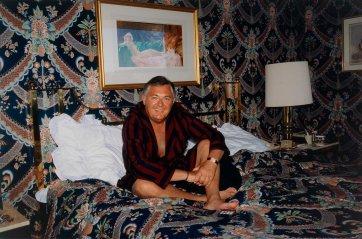
Wesley Stacey and Elenor Williams, Bermagui, NSW 1977 (at Wesley's home)As photography came of age in Australia in the 1970s, Ellis was a driving force behind increased public awareness of photography as an artform. In 1972 he opened Australia's first dedicated photography gallery, the Brummels Gallery of Photography in Toorak Road, Melbourne. Over the next eight years its exhibitors included many notable names in Australian photography, including Henry Talbot, Carol Jerrems, Wesley Stacey, David Moore, John Rhodes, Jon Lewis, John Williams, Ponch Hawkes, Sue Ford and Melanie LeGuay. Robert Ashton recalled that the exhibitions at Brummels had no particular theme; 'the main ingredients were enthusiasm, raw talent, and craftsmanship'. On hearing of Ellis's initiative, Monahan Dayman Adams director Phillip Adams wrote to Rennie stating that 'in Russia they would make you a hero of the Soviet Union, in Japan the Diet would declare you a national treasure, but here the philistines will probably break your heart'. Outside of the darkroom, however, Rennie preferred not to dwell on the negative.
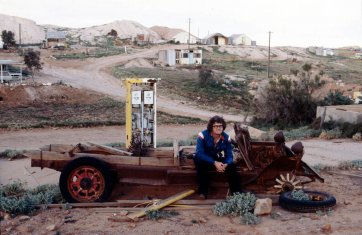
Carol Jerrems, St Kilda 1970 (at her home in Mozart Street)It was inevitable that Ellis's love of photography and writing, fuelled by his energy and enthusiasm, would lead him into publishing his own work. He commenced by exploring the underbelly of Sydney's Kings Cross, accompanied by close friend Wesley Stacey. The activities of the people they documented there were then considered scandalous, but their images, expressive of their own curiosity, display warmth for the people of this hidden world. 'I developed a compulsion to document the theatre of behaviour', said Ellis, 'to offer insights and revelations into other people's worlds especially the offbeat, the erotic and the eccentric . my camera became the key that unlocked doors and gave me access to engage in a great variety of encounters that otherwise would have been outside my experience'. Kings Cross Sydney published in 1971, was the start of many more publications. Life's a Beach - its title coined by Ellis - sold over 30,000 copies following its publication in 1983.
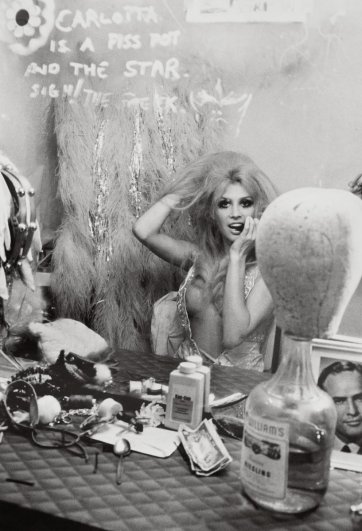
Tattoos, New York, 1976With the camera as his companion and passport, Ellis moved effortlessly between different social worlds. Ashton observed that 'he was often involved in the situation he was photographing and the boundaries between life, working and art were frequently blurred'. While he continued to head for the beach whenever he could, Ellis never missed a spring racing carnival, a grand final; he covered art openings, demonstrations, festivals, fashion parades and music events. He captured gatherings ranging from A-list parties to behind-closed-doors affairs, recording people and events without judgment or voyeurism but rather a sense of curiosity and inclusiveness. For the Bond, Skase, Smorgan, Packer and Fox families he was the photographer of choice at significant family celebrations. Not for Ellis the staid, posed photographs that are staples of the wedding genre; he embraced the candid moment in social photography, welcoming the unrehearsed and seeking the unguarded moment. Filmmaker and friend, Fred Schepisi remembers that he had 'the knack of being invisible while encouraging the event to take place'.
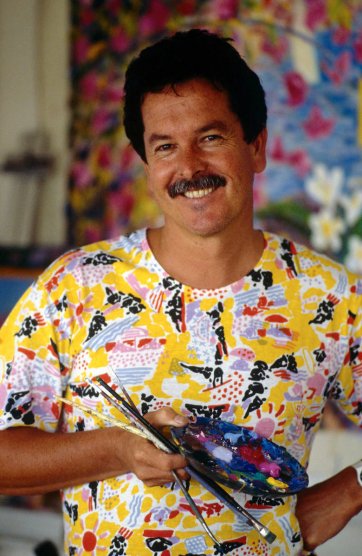
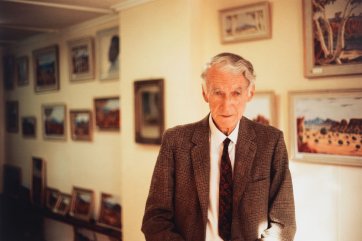
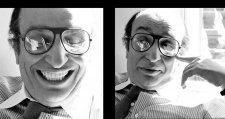
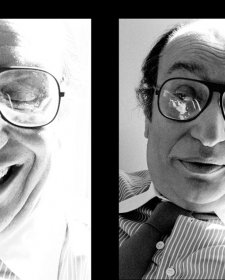
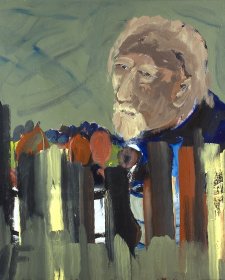
Fred Williams, Melbourne 1981 (in his studio)Although his photographs are held in collections in Australia, France, China and the USA, and his awards included an Art Directors Club Award for Photojournalism and a United Nations Habitat Award for photography, Ellis had little interest in photographic technique beyond correct exposure and the quality of the light, once saying that he was 'interested in images rather than f-stops.' Although well known in the photographic world, his name is often absent from authoritative Australian photographic anthologies. Ellis's enthusiasm for documenting scantily clad women and hedonistic Australian culture, are now rather unfashionable. Almost certainly, these aspects of his work, combined with his zeal to self-publish, have discouraged critical examination of the value and importance of Ellis's work in photography in Australia. As time passes, and more unpublished photographs are revealed from the Ellis Archive, his images will increase in value as historical records. Moreover, his work deserves a broader and deeper appreciation in the context of the development of Australian photography, which he himself did so much to promote. When pressed to categorise his own photography as to whether it was art, social realism, photojournalism or simply slice-of-life indulgence, Ellis replied with a quote from the pioneering American photographer Alfred Stieglitz: 'Art or not art, that is immaterial - I continue on my own way, seeking my own truth, ever affirming today.' In tribute to Rennie, Aussies All continues that process of affirmation.
Simon Elliott

The Gallery
- About us
- Support the Gallery
- Venue hire
- Publications
- Research library
- Organisation chart
- Employment
- Contact us
Learn
close
close
- Make a booking
- Onsite programs
- Online programs
- School visit information
- Learning resources
- Little Darlings
- Professional learning