![]() |
|
|||
![]() |
|
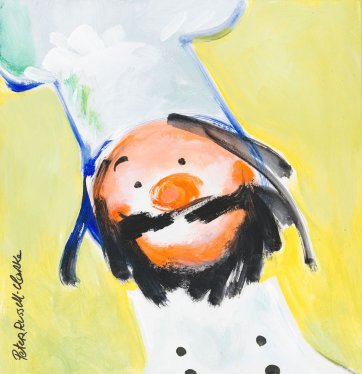
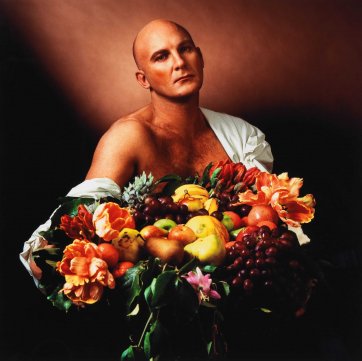
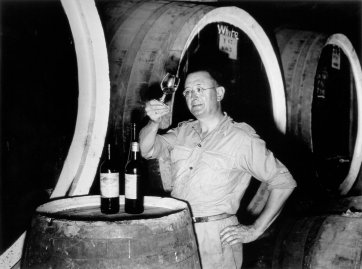
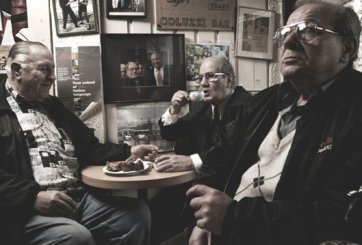
Full Exhibition Listing Nude, Glorious Nude 2002 Melbourne photographer Rennie Ellis undertook a series of “Naked Chefs” for exhibition at Melbourne ’s Hotel Sofitel as a charity fundraiser in 2002. He managed to coax 12 of Melbourne ’s noted chefs to disrobe and pose with their favourite kitchen utensils, spices etc. Here is a selection of six of the images. Ellis was a documentary and society photographer for more than 30 years as well as publishing over 17 books that reflected Australian culture, his most famous being the Life's a Beach series. He died suddenly in August 2002 aged 63. Robert Oatley Robert Oatley and his family established Rosemount Estate in 1969. Oatley learned the lessons of quality through the 1950s and 1960s when he travelled the world as a coffee trader, offering the richly textured coffees of Papua New Guinea to discerning buyers insistent upon the very finest ingredients with which to enrich their blends. These were valuable lessons that he would take with him into the world of wine. From that first vintage Bob Oatley grew a wine company that, prior to its merger with Southcorp Limited in 2001, became acknowledged as the premier Australian family winery and one of the leading private wineries in the world. Bob Oatley is now a director and Deputy Chairman of Southcorp Limited, Australia ’s largest wine producer and exporter. Mietta O’Donnell (and Alain Chappel) 1987 Mietta O’Donnell (1950-2001) was a much-loved Melbourne restaurateur and doyenne of the arts. Many of O’Donnell’s endeavours were undertaken in partnership with her husband, Tony Knox. O’Donnell made her own name, quite literally, with the two incarnations of Mietta’s restaurant in Melbourne . The first Mietta’s was a simple, but trendy, café in unfashionable North Fitzroy . Then in the mid-1980s Mietta’s moved to Alfred Place in the central business district. It featured a formal upstairs dining area and a downstairs lounge that played host to live theatre, stand-up comedy, and readings by some of Australia ’s best-known writers. After closing the restaurant in 1995 O’Donnell worked as a food writer and restaurant critic. O’Donnell wrote many books, her final book, Mietta’s Italian Family Recipes, was published a year before her untimely death in a car accident. Mark Olive Mark Olive is a chef and filmmaker who, through his Black Olive food segment on SBS TV’s Message Stick, has expanded our understanding and appreciation of Indigenous foods. Olive was born in Wollongong , but his people come from the Bundjalung nation on the Northern Rivers of NSW. He learnt to cook by watching his mother and aunts, but was also influenced by Wollongong ’s large multicultural population and later trained under an Italian chef. After 15 years in this profession, Olive’s studies in film and television led him to Message Stick. As ‘The Black Olive’ he has incorporated his passion for food and film, introducing a national audience to his unique recipes for crocodile, kangaroo, emu and possum meat and the flavours of Australia’s Indigenous herbs and berries. Maurice O’Shea 1951 Maurice O’Shea (1897-1956) is remembered as a key figure in the formation of the modern Australian wine industry. During World War 1 he studied winemaking in France, returning to Australia in 1921 to work on his family’s property in NSW’s Hunter Valley – the O’Sheas had recently bought the Old Hill Vineyard at Pokolbin, originally planted by the King family in the early 1900s. Maurice O’Shea renamed the vineyard Mount Pleasant , and – in an age when most Australian winemakers pursued the humble goal of producing bases for fortification as sherry or port – forged a reputation as a maker of distinctive and high-quality table wines. Although the O’Shea estate was acquired by the McWilliam family in 1941, O’Shea was retained as the firm’s chief winemaker and held the position until his death. Today, the Maurice O’Shea Award – Australia ’s most prestigious wine prize – is awarded biennially for outstanding achievement in Australian winemaking. Anders Ousback 2004 Anders Ousback (1951-2004) was born in Sydney in 1951 and worked with the wine merchant and writer Len Evans before becoming trainee manager at Sydney ’s Summit , the revolving restaurant atop the Australia Square building. At age 24 he became maitre d’ at Hermann Schneider’s Two Faces, where he demonstrated a sharp memory for customers’ faces and an unerring knack for recommending the right wine. He then worked in restaurant design, overseeing makeovers of some of Sydney ’s premiere eateries – including The Wharf, Bennelong at the Opera House, and the Café at the Art Gallery of NSW. Ousback then embarked on a second career as a potter – he studied at Sydney ’s National Arts School , and his ceramics were bought by such institutions as the Powerhouse Museum and the National Gallery. He made a triumphant comeback as a restaurateur in 1999, when he opened a refurbished incarnation of the Summit . Tim Pak Poy 1998 Tim Pak Poy is a chef and owner of The Wharf in Sydney . Trained as a perfumer, in 1983 Pak Poy followed a passion for food, securing a job with the celebrated Cheong Liew at Adelaide ’s Nediz Neddy’s. Moving to Sydney, he worked with Anders Ousback, had a stint at Bilson’s and then in 1988 became head chef at Claude’s before buying the restaurant six years later. Innovative and elegant, within two years Claude’s received The Sydney Morning Herald’s inaugural Restaurant of the Year Award, and an unmatched score of 19/20. Even among his peers, Pak Poy is singled out as an artist and is legendary for his detailed, almost obsessive care in the preparation of food. Earlier this year he sold Claude's to his second chef of four years, Chui Lee Luk, and is now concentrating on The Wharf at the Rocks. Martin Palmer 2004 Martin Palmer founded the Martin’s Seafoods company in Cooma with a very simple intention of ‘selling fish during the morning and skiing the rest of the day’. Recognising the opportunity Cooma presented, situated inland and away from the ocean, Palmer began selling fish and shellfish sourced from the south coast of NSW as well as fish shipped down from Sydney . Selling out of the back of his van, the mainstay of the business was ski-lodges and hotels as well as the general public looking for some seafood. After five years of business in the snowfields, Palmer moved to Sydney where he worked from a small shop located within the Sydney Fish Market. He quickly developed a solid reputation amongst restaurateurs and chefs and today Martin’s Seafoods is a leader in the seafood wholesale industry supplying the high-end market segment of Sydney restaurants and hotels. Omelette (Ian Parmenter) 2001 Ian Parmenter is a celebrity chef and presenter of ABC TVs Consuming Passions. Born in London , Parmenter jokes that he survived nine years of British cooking before his family moved to Brussels , where he began his love of food. He worked in London as a journalist, but moved here to join the ABC in 1973, becoming a television producer and director. In 1991 Parmenter was thrown in front of the camera for the debut of Consuming Passions, and soon became known as the bloke in the kitchen, promoting cooking and Australian food. His five-minute segments ran for 450 episodes and screened in 15 countries. The author of ten cookbooks, he is the driving force behind Adelaide’s Tasting Australia, a festival that attracts food and wine lovers and epicurean writers from all over the world. Nino Pangrazia and Sisto Malaspina 2004 Pellegrini’s Bar in Bourke St. Melbourne is an icon. This classic Italian espresso bar, with its laminex, gold backed mirrors and vinyl stools, remains unchanged in decades and still serves one of the best coffees in the city. Their minestrone, pasta, salads, granita and cakes are all hearty and the service, befitting a bar seating only 50, very fast. Running both long sides of the narrow bar, those famous mirrors allow diners to view any and everyone in the room. Established in 1954 by Leo and Vildo Pelligrini, it was among the first in Melbourne to serve cappuccino, and probably the first to introduce pizza. Pelligrini’s Bar was purchased in 1974 by Nino Pangrazia and Sisto Malaspina. Armando Percuoco 2002 Armando Percuoco is the head chef at BuonRicordo restaurant in Paddington, Sydney. Born in Italy into a family of restaurateurs, he has worked in restaurants since the age of 14. He came to Australia in 1972 and joined his father, Mario, at Arriverderci restaurant in east Sydney . For four years he worked as head waiter and day manager at Chianti before he and his father opened PulcinellaRestaurant in Kings Cross in 1979. In 1986 he published his first cookbook, re-published in 1992 as Modern Italian Cooking in Australia, and the following year opened the award winning Buon Ricordo. Percuoco is described as a taste maker amongst the Sydney food scene and is a man of strong convictions. He believes that to understand the logic in putting together a dish you need to understand the culture behind it. "I am sick and tired of finding beautifully presented dishes - then you eat them and you cannot taste anything, I want a bit of guts". Neil Perry 1997 Neil Perry apprenticed at Sydney ’s Sails restaurant before becoming head chef at Barrenjoey Restaurant in Palm Beach . In 1986 he opened his own restaurant, the highly successful Blue Water Grill at Bondi. It was in 1989, in partnership with his cousin Trish Richards, that he opened Rockpool in Sydney ’s Rocks area. Within six months Rockpool had been named Sydney ’s best new restaurant by the Herald’s Good Food Guide. Rockpool currently sits in the Guide’s elite Three Hat category, and the British magazine Restaurant ranks it among the 50 best restaurants in the world. In the wake of Rockpool’s success Perry added new Sydney restaurants to his empire, including Asian-themed Wockpool. He is a food consultant to Qantas Airways, and appears on several cooking shows. He is also the author of two recipe books, Rockpool and Simply Asian. Damien Pignolet Born in Melbourne in 1948, Damien Pignolet’s name is synonymous with refined bistro dining in Sydney . Trained in hotel management and catering in Victoria , Damien credits his entrance onto the Sydney restaurant stage to Mogens Bay Esbensen who appointed him executive chef of Pavilion on the Park in November 1978. Exposed to what Pignolet described as “food of the world” and a “menu that changed daily”, Pignolet refined his skills as a chef. In 1981, Claude Corne, the foundation owner of Claude’s decided to sell and in Pignolet’s own words “by the next day we had bought it”. With his wife, Josephine, Pignolet set about cooking “extraordinary three-star food” that was “as pure as it could be” and by 1983, Pignolet’s Claude’s was at the pinnacle of Sydney dining. With his wife’s death in December 1987, Pignolet looked for a new direction, establishing Bistro Moncur. Andrew Pirie 1997 Dr Andrew Pirie AM is generally acknowledged as Australia 's most learned viticulturist, and the first holder of a PhD in that subject. A year in Europe made him a passionate believer in the significance of ‘terroir’ (climate and soil) to make a premium wine. On his return to Australia and following an extensive viticultural search, he chose The Tamar Valley, Pipers River and Pipers Brook regions in Tasmania to establish a cool-climate vineyard. From the outset, Pirie marketed the Pipers Brook Vineyard and the Ninth Island brands with a distinctive regional identity. Pirie departed Pipers Brook in 2003 to start a new venture, Pirie Tasmania . According to James Halliday he has been the most influential force in establishing the reputation of Tasmanian wine on the world scene. ‘Beppi’ 2004 Giuseppe Polese, better known as Beppi, with his wife Norma opened the first Italian restaurant in Sydney in 1956 and it is still owned and run by the family. Born north of Venice , Beppi moved to Australia in 1952 and worked vicariously as a waiter both in Sydney and Wagga Wagga. He then decided to borrow money to purchase St James restaurant in East Sydney . There Beppi slowly introduced Italian fare - long-cooked stews, pastas, squid, anchovies and mussels which he took from the wooden piles of the Spit Bridge . He also sold red wine illegally disguised in coffee cups. In 1962, Beppi’s was named Sydney ’s best Italian restaurant. With son Marc, Beppi's opened Mezzaluna Restaurant in Potts Point in 1992. John Portelli 2004 John Portelli has 34 years experience in the food business, having worked at Carlton ’s Lygon Food Store for 17 years before joining Enoteca Sileno. His hands-on experience and thorough knowledge of Italian food and wine is often sought by food industry professionals. Although Australian born, Portelli has spent much time on his family’s home island of Eolie , off Sicily . Portelli has recently opened the specialist Italian enoteca — part café, part food and wine shop, and part wine bar and restaurant. With this enterprise he aims to "to create the right environment for an Italian food and wine culture" in Lygon Street , Carlton . Colin Preece 1968 In late 1932 Colin Preece (1903-1979) arrived at Great Western during the depression, where his attention was on just keeping the company afloat. He retired 30 years later as one of the key winemakers of Australia . He had graduated dux from Roseworthy Agricultural College in 1923 planning to manage the family flour mill, however, after taking an optional subject in oenology, he decided to join the staff at Seppeltsfield. Later he moved to Victoria and produced a seemingly endless array of dry white, dry red and sparkling wines of exceptional complexity and equally exceptional quality for Great Western. Ranked with Maurice O’Shea as Australia ’s great winemaker and master blender, in the production of sparkling wine he had no peer. In 1979 he died and his body lies in the Great Western cemetery in Ararat. David Pugh 2002 David Pugh’s classical training in fine hotels in New Zealand , Australia and the United Kingdom is reflected in his menus at the two Brisbane restaurants, Two Small Rooms and Restaurant Two, where he is supervising chef and partner with Michael Conran. Their association began in 1993 at Two Small Rooms in Toowong, established by Michael six years earlier. From this BYO corner shop they cater to a range of clients from suburban dwellers to overseas travellers looking for ‘something that is fairly Queensland ’. Restaurant Two, their city premises and three times the size of Two Small Rooms, was awarded three stars by the 2004 Australian Gourmet Traveller Restaurant Guide and dubbed a ‘CBD icon’. Conran and Pugh have also collaborated to publish their recipes in Two Small Rooms and a Kitchen 1997. David Rayner 2001 David Rayner opened his first restaurant, River House in Noosaville , Queensland , in June 2004. The event represented the realisation of a dream for the English-born chef who served his apprenticeship at London ’s Savoy Hotel. Rayner worked at several of London ’s well-known restaurants before arriving in Australia 10 years ago, where he successfully led a number of kitchens in Sydney . He led the kitchen team at Berardo’s for four years, and the restaurant won several prestigious awards during that time. The dream was finally realised when River House opened. “Our restaurant is about becoming part of the neighbourhood”, says Rayner. The location is an essential part of the River House ethos: “Climate and soil favour the cultivation of an amazing variety of vegetables, herbs and salad greens and fishermen supply an abundant catch of fresh fish and seafood”. Three generations of the Reid Family, Tasmania 1997 The Reid family has been growing apples in Tasmania for almost 150 years. The tradition began in 1856 when James Reid settled in Castle Forbes Bay . By the time James passed away in 1900, his orchard had become very successful. James’ youngest son, Thomas, exported fruit to the UK during World War 1. It was Thomas’ son Steve and his two sons Tom and Doug,who registered the company name S.D. Reid & Sons in the 1950s. Tom and Doug retired from the business in the late 1990s and Tom’s son Tim and Debra took the reigns. Tim and Debra’s second daughter, Allison, continues the family tradition of involvement in the fruit growing business. Recently the company has expanded into cherry production and aims to be the largest cherry producer in Tasmania and, most likely, Australia ’s biggest cherry exporter. Jacques Reymond 2002 Well-known restaurateur Jacques Reymond arrived in Melbourne from France in 1983 with his wife Katherine and young family, and no immediate prospects. He answered an advertisement and, within a week, was working at Mietta’s. The 29-year-old chef’s life had been colourful: cooking since he was 11; an internship in English restaurants in France; lured to Sao Paolo to run a kitchen in a restaurant – which turned out to be a brothel; in charge of 150 cooks in a hotel deep in the Amazon jungle; work in Madrid; France again; and then Melbourne - where the peripatetic Jacques intended to stay for only a short time. After five years working for Mietta O’Donnell, Jacques opened his own restaurant in Richmond . His next move was to last. In 1992 he acquired a handsome Victorian mansion in Prahran where he opened the now much acclaimed Jacques Reymond Cuisine du Temps. Rickshaw (Jason Roberts) 2001 New Zealand born Sydney chef Jason Roberts has become a brand — ‘The TV Cook’. This popular host of Fresh: Cooking with the Australian Women’s Weekly, on the Nine Network, was spotted in 2002 by a celebrity management agency, the brand was created, and The TV Cook was launched. Roberts’ debut in the USA on Good Morning America in 2003 reached a global audience of 14 million. Such appearances are a world away from Roberts’ earlier role as head chef at Sydney ’s Bistro Moncur. These management strategies, designed to ‘create the want in the world market for The TV Cook’, have resulted in Jason’s appointment to endorse a new cookware range — and travel to 80 destinations worldwide demonstrating the product. Celebrity status for Roberts has another side. He gives much of his free time to various children’s charities, supporting them in person. Self portrait 2004 Peter Russell-Clarke started his career as a freelance cartoonist, working for the top advertising agencies in Australia and overseas. He was later employed as a food consultant and wrote for New Idea, Woman's Day and various other magazines, as well as producing his own cookbooks. Throughout his career Russell-Clarke has prepared meals by invitation for Governors and Premiers as well as cooking a Silver Jubilee dinner for Prince Charles. During the late 1980s and early 1990s, Russell-Clarke became the first Australian television ‘Celebrity Chef’ with his program ‘Come and Get It’. Televised in the early evenings as families were sitting down to dinner, the catchy theme song and simple, health conscious recipes became synonymous with the development of a uniquely Australian approach to cooking. Since retirement he has focused on his love of painting. Cindy Sargon 2004 The popular TV chef Cindy Sargon is co-owner of Alligator Brand, a food business established in 1993 to supply high-quality pasta to caterers, delis, restaurants and airlines. The company, which aims to supply a gourmet product every bit as good as the pasta that chefs create by hand in their own kitchens, was the sole provider of pasta to the athletes’ village at the 2000 Olympics. Since 1990 Cindy Sargon has built a devoted following as a celebrity chef, appearing on numerous cooking shows on both pay TV and free-to-air. For the 7 Network she has appeared on Surprise Chef, as a celebrity judge on My Restaurant Rules, and most recently as the host of Saturday Kitchen. Hermann Schneider 1960 by unknown gelatin silver photograph Courtesy of Hermann Schneider Born in Switzerland , Hermann Schneider was imported to Australia , along with other top European chefs, to assist with the catering for the 1956 Melbourne Olympics. In 1960 he opened Melbourne ’s legendary Two Faces restaurant, long regarded as one of Australia ’s finest – in 1989 the Melbourne Age named it one of the ten best restaurants of the decade. Acclaimed as combining European professionalism with Australian ease his restaurant attracted prime ministers, union officials, artists and journalists as regulars. As owner-chef at Two Faces, Schneider mentored many prominent young chefs of the current generation, including Teage Ezard and Luke Mangan. After the closure of the original Two Faces, Hermann Schneider with wife Faye ran Two Faces at Delgany before becoming chef-owner at Arthur’s, on Victoria ’s Mornington Peninsula which closed in summer 2003. Leo Schofield 2001 Leo Schofield AM has had an enormous impact upon Australia ’s dining scene through his incarnation as a restaurant critic. Now a leading figure in the arts in Australia , it was during a twenty-five year career in advertising and journalism that Schofield began critiquing restaurants. He edited the first edition of The Sydney Morning Herald Good Food Guide in 1984, and his reputation was such that it was said he could close a restaurant with a bad review. Described as ‘ Sydney ’s arbiter of taste’, Schofield has been credited with influencing the cosmopolitan and international style of Sydney dining through his modern approach to food. While he has retired as a restaurant critic, he remains Editor-At-Large for Gourmet Traveller. Max Schubert 1993 Max Schubert (1915-1994) was the man behind Penfolds Grange Hermitage, the wine unanimously hailed as Australia ’s finest. Born in South Australia ’s Barossa Valley , he joined Penfolds as a messenger boy at age 16. His rise through the Penfolds ranks was swift: by 25 he was the firm’s Assistant Winemaker; at 33 he became Chief Winemaker. In 1950, he was sent to Europe to study winemaking. In Bordeaux he sampled “mature” clarets – wines that retained their flavour although 40 or 50 years old – and returned to Australia determined to make “an Australian red wine that would last at least 20 years and be comparable with those produced in Bordeaux .” Experimental production of Grange Hermitage began with the 1951 vintage. The first commercial Grange was the 1952 vintage, released in 1955. Critical reaction to the new wine was disastrous: one expert called it “a concoction of wild fruits and sundry berries with crushed ants predominating”; Phillip Searle Phillip Searle is a chef who runs Vulcans cafe in Blackheath in the Blue Mountains . Searle was at Nediz Neddy’s and Possums in Adelaide during the seventies before moving to Sydney and setting up the famed Oasis Seros. Searle’s latest move saw a transformation in his approach to food and dining. Vulcans is located in Blackheath’s old bakery, and Searle uses the original oven to do his cooking, offering a limited menu and dishes that are shared, reviving a type of communal eating. He says, “It’s back to the hearth, to the shared table and people love it." Searle also teamed up with another Blackheath baker, Brent Hurst, to set up the Infinity Sour Dough Bakery in Darlinghurst, which rapidly earned a reputation as one of Sydney ’s finest bakeries and established a brisk trade to restaurants. Peter Singer 2002 Professor Peter Singer is an influential philosopher, who advocates veganism as the only ethical diet. Singer’s utilitarian philosophy – judging whether acts are right or wrong by their consequences – led to a belief that all animals capable of suffering should be given equal consideration, and therefore the use of animals for food or experimentation is unjustifiable. His book Animal Liberation 1975 is credited with triggering the modern animal rights movement. He continues to campaign against factory farming of animals, viewing it as cruel and unnecessary. Singer is currently Professor of Bioethics at Princeton University ’s Centre for Human Values. A founding member of the Green Party in Victoria , in 1996 he stood unsuccessfully as a Greens Senate candidate. Gary Skelton 2000 Gary Skelton is a chef whose Season restaurant helped launch Noosa as a centre for first-rate dining. Season was praised by one reviewer for bringing “an impressive new seriousness and maturity to Noosa eating”. Skelton established a reputation in Sydney at The Edge in Darlinghurst before going north to set up Season. The restaurant was named after its menu, which is seasonally based and featured light, bright dishes gently enhanced by Middle Eastern, Asian and European influences. Skelton sold Season last year, but remains a consultant to the restaurant. Known for his innovation, he now works primarily in the food industry in an advisory role. Charmaine Solomon (and Ruben Solomon) 2004 Charmaine Solomon is an international cookery writer whose user-friendly but distinctive recipes and knowledge of spices have revolutionised cooking in Australia . Dubbed the high priestess of Asian cooking or the spice queen, incredibly when Solomon emigrated here from Sri Lanka with her young family in the 1950s she had to teach herself how to cook. By 1964 her award winning cheese biscuits led from a bake-off to an invitation from Margaret Fulton to join the Women’s Weekly as a food writer. She has written 31 cookbooks, including the classic Complete Asian Cookbook, which is an international bestseller. Solomon, who has been making her presence felt in our kitchens for 40 years with her joyful approach to cooking, believes food should be “fun, enjoyable, and relaxing - something you share with friends and family”. Gloria Staley c.1980 Gloria Staley was once known as the grande dame of Melbourne restaurateurs. For many years she operated Fanny’s (which The Age named as one of the ten top restaurants of the 1980s) and its sophisticated younger sister establishment Glo Glo’s. In 1985 she opened her first restaurant outside Melbourne, Sydney ’s lavish Chez Oz. She went on to open several other Staley family establishments in Sydney and on the Gold Coast. Rosemary Stanton Dr Rosemary Stanton OAM, perhaps Australia ’s best-known nutritionist, embarked on a Science degree in 1960, followed by post-graduate studies in nutrition and dietetics before establishing her own practice in 1969. In the years since she has worked as a public speaker, health educator and nutrition consultant. Her clients have included government departments, sporting teams, and selected businesses. She has published 31 books on food and nutrition, gives an average of 10 radio interviews a week, and until recently was resident nutritionist on Burke’s Backyard. In 1998 she received an Order of Australia Medal for services to health education in Australia . Her main professional aim is to make Australians “understand more about what they eat, so they can enjoy the true flavour of food and the immense joy of feeling fit and well-nourished.” Jeremy Strode 2003 Jeremy Strode is the head chef for the Republic Hotel in Sydney . Born in England , h e started cooking out of necessity being the eldest child in a one-parent family with three kids to bring up. After his apprenticeship with the hotel chain, Trust House Forte, Strode worked at London 's Hyatt Carlton Towers under Bernard Gaune and the Waterside Inn at Bray with Michel Roux. After sous chef appointments in London and France , Strode and his Australian wife moved to Melbourne in 1992. Since this time, Strode has been instrumental in the success of many restaurants in Melbourne , including The Adelphi, Pomme and Langton’s. After ten highly successful years in Melbourne , Strode relocated to Sydney to take the helm of MG Garage in 2002. Following the closure of MG Garage in August 2004, Strode began his most recent appointment at the Republic Hotel in Pitt Street , Sydney . Will Studd 2004 In 1976, Will Studd began importing a selection of French cheeses from Paris for the seven delicatessen outlets that he had established in Central London . In 1981 he arrived in Australia with a refrigerated van and a determination to change the way Australians thought about cheese. His concern was that, whilst Australia was producing high quality milk products, he did not think enough premium cheeses were being developed. A founder of the Australian Specialist Cheesemakers Association in 1994, judge at cheese competitions, regular contributor to magazines, and frequent presenter of master classes, Studd has been a tireless and devout enthusiast for all things cheese. His 1999 book, 'Chalk and Cheese', in 2000 won Best Cheese Book in the World at the Périgueux Book Fair and the Michelin Silver Ladle Award for best food book at the World Media Awards. Ben O’Donoghue and Curtis Stone 2003 and 2004 Ben O’Donoghue and Curtis Stone are the exuberant chefs who presented ABC TV’s Surfing the Menu. Described as one part travel and two parts cooking show, the program took the duo across Australia parading the amazing range of world-class produce that has inspired so many of our chefs. Armed with surfboards, boning knives and a larrikin sense of humour, the pair shared recipes and their love of food and life. Stone and O’Donoghue worked in Melbourne and Sydney respectively before moving to London . While both have appeared on UK television, Stone, who also compered Channel Seven’s My Restaurant Rules, says they always like to get back into the kitchen. He is working on a new project with restaurateur Sir Terence Conran, while O’Donoghue is head chef at Piccadilly's chic Atlantic Bar. John Susman 2004 John Susman is a leading expert on seafood and founder of the Flying Squid Brothers, which supplied local seafood to the top Australian restaurants throughout the 1980s and 1990s resulting in some world-class dishes. The company owed it success to Susman’s involvement in all stages of production from feeding fish to harvesting and handling. It also exported gourmet food to Asia , including oysters from Nambucca Heads and King George whiting from South Australia as well as produce like vine-ripened tomatoes and baby cos lettuce. Susman believes that Australia is recognised in the Asian markets for “ having a produce-led cuisine”. An oyster specialist, he has worked on oyster regionalism and convinced many restaurants of the merits of on-the-spot shucking. Society of Gourmets 1957 “To eat or not to eat- that is the question” begins the book Oh for a Man Who Cooks published for charity in 1957 by the self proclaimed Society of Gourmets. The Society of Gourmets was six members (never more than six) which meet on the final Wednesday of each month to cook and discuss food in Sydney . The group included ambassadors, restaurateurs and food enthusiasts: Sigurd Klingenberg, Carlos Zalapa, John Walker (Johnny Walker) Frank Keane and Ted Moloney. It was a set of recipes derived from French, Mexican, Spanish, Tahitian and Italian sources either their respective homelands or collected from various travels overseas with whole chapters devoted to salads and the new-comer, coffee. It is one of many beginnings of an international influence on the eating habits of post war Australia . Michael Symons 1998 For nearly 30 years, Michael Symons has researched and written numerous articles and research papers about food. He published the ground breaking One Continuous Picnic: A history of eating in Australia 1982. Followed by The Shared Table: Ideas for Australian cuisine (1993), and The Pudding that Took a Thousand Cooks 1998. Michael Symons initiated the highly influential series of Symposiums of Australian Gastronomy in 1984 and gained a PhD in the sociology of cuisine from Flinders University in 1992. For fifteen years, he was a partner in a restaurant in the Adelaide Hills, the Uraidla Aristologist. In 2000 he moved to Wellington , New Zealand , where he is a Marsden Fund researcher into cookery books. Tony Tan 1999 When Tony Tan was a little boy he would sit on his mother’s lap and she would teach him how to cook. When he was older, Tan’s mother wanted him to take over the family restaurants in Malaysia but he ran away and didn’t want to be involved in the restaurant business. Times have changed and today Tony Tan’s credentials include being a chef, food historian, writer, television presenter and culinary tour guide. He has owned and managed restaurants in both Sydney and Melbourne, specialising in Asian and cross-cultural cuisine. Tan has studied at Leith’s School of Food and Wine in London and La Varenne in Paris and travels extensively, organising and leading tours throughout South East Asia . He is a regular contributor to various food publications and a sought-after teacher both nationally and overseas. Noodles are his great passion and he is renowned for his expertise in cooking with all the different sorts of noodles. Luis Tanner 2004 In 2004 six-year-old Luis Tanner became Australia ’s youngest TV chef with the launch of his show Cooking for Kids with Luis. Born in Guatemala , Luis was adopted at the age of two by the Sydney film-maker Phillip Tanner and his partner, the actress Dina Panozzo. Luis’s cooking show, which is filmed by his father, airs in five-minute episodes on the pay TV channel Nick Jr, and aims to teach children easy-to-cook dishes, such as scrambled eggs and spicy meat pies. “He’s like a six-year-old version of Jamie Oliver,” his father has said of the show’s star – “just as spontaneous while being both serious and funny.” David Thompson 2003 David Thompson is one of Australia ’s foremost chefs, restaurateurs and an expert on Thai food. He has been passionate about authentic Thai cuisine since a holiday to Thailand in 1986. He later moved there to work alongside cooks who had perfected their craft in the kitchens of Thai royalty. He returned to Sydney to open Darley Street Thai in 1991 and Sailors Thai in 1995. The Sydney Morning Herald voted Darley Street Best Thai Restaurant eight times. In 2001 Thompson moved to London to set up Nahm, which earned a Michelin Star after only seven months. A critic of fusion food, he is a consultant with Bangkok ’s Suan Dusit College on the preservation of Thai culinary heritage. His book Thai Food is regarded as the bible of Thai cuisine. Wine tasting at the Tulloch vineyard 1968 Ivor Roberts (writer) and Douglass Baglin (photographer) published Australian Wine Pilgrimage in 1969 as one of the early books on wine in Australia that was aimed at the non-specialist wine consumers. This image was taken in the Hunter Valley at Tulloch’s winery. Tulloch’s was founded 1895 and over the ensuring years its reputation suffered under multiple ownership changes. It is now in the hands of Poole ’s Rock Wines. Baglin’s photograph of the hospitable Tulloch’s wine tasting events includes Jay Tulloch standing son of the then late Hector, Mrs Eileen Tulloch and Mr and Mrs Johnnie Walker of Bistro Restaurant, Sydney . Murray Tyrrell 1978 Murray Tyrrell AM (1921- 2000) was a winemaker who transformed his family winery from a supplier of bulk wines to other firms into a leading wine brand. Tyrrell, who took over Tyrrell Wines in 1959, was an outspoken champion of the Hunter Valley winegrowing region and of wine tourism in the area. He created one of Australia ’s first commercial chardonnays, and was instrumental in popularising both chardonnay and pinot noir. An infamous incident in 1967 saw Tyrrell jump a barb- wire fence to 'liberate' chardonnay cuttings from an experimental vineyard owned by Penfolds, which he grafted onto his own vine rootstock. Tyrrell’s Vat 47 launched in 1971 remains a first-rate chardonnay, while in 1979 he won the Gault Milleau Award for the World's Finest Pinot Noir at the Wine Olympiad in Paris . The Holmes à Court family by unknown digital image Courtesy of Vasse Felix In 1967, Vasse Felix was the first commercial vineyard and winery to be established in the Margaret River region of Western Australia . The vineyard took its paradoxical name from an early event in the district. Vasse was a French seaman who drowned last century when his longboat overturned near the site of Busselton while exploring the coastline on the French ship “Geographe”. Felix is the Latin word for fortunate or luck. Established by Dr Tom Cullity, the winery’s name, therefore, refers to a favoured place in Australia discovered by the French. In 1987, Vasse Felix was purchased by the Holmes à Court family and today grows under the leadership of Mrs Janet Holmes à Court. Apart from producing award-winning wines, the facilities include a first-class restaurant, café and a permanent art gallery housing the Holmes à Court art collection as well as performances, concerts and functions. Tetsuya Wakuda 2003 Tetsuya Wakuda was born and raised in the Japanese town of Hamamatsu , where he trained as a hotel chef. He came to Australia in 1982, at the age of 22, working as a kitchen-hand at Sydney ’s Fishwives restaurant before becoming the sushi specialist at Tony Bilson’s Kinsella’s. At Kinsella’s Tetsuya learnt the classical French techniques that still inform his cooking today. He left in 1984 to open Ultimo’s in partnership with Kinsella’s former head waiter. Then in 1989 he opened Tetsuya’s in Rozelle. The tiny shopfront restaurant – it seated 55 people – was perpetually booked out months in advance, with long daily waiting lists. In 2000 Tetsuya’s moved to its current and more spacious quarters in Kent Street . Tetsuya is renowned for creating innovative dishes with a delicate balance of natural flavours. “Make simplicity seem like abundance” is a key philosophy behind his cooking. Pontip Walpole 2004 Pontip Walpole runs Pontip Exotic Fruit & Vegetables shop and has been supplying Sydney kitchens – both commercial and domestic – with Thai ingredients for over a decade. A former home economics teacher, Walpole came to Australia in the early 1970s and, unable to find ingredients for Thai cooking, decided to grow her own in her backyard. Soon she was selling produce from the back of a truck and then opened the now renowned Pontip in Haymarket. Central to the Thai food explosion in Australia , she has influenced not only what we eat but also what local producers grow. While in the seventies Pontip was forced to cultivate her own kaffir lime trees and baffled farmers with orders for green papaya, today all the fresh produce in the shop is locally grown, while Thai ingredients are standard fare in markets and supermarkets. Ned Winter 2004 The bush cook Ned Winter is known as Australia ’s King of Camp Oven cuisine. For many years Ned has travelled the country appearing at country festivals, where he spins bush yarns and gives bush cooking demonstrations that enable him to show off his vast collection of camp ovens – he owns around a hundred of them, of which the largest weighs close to 200 kilos. This prodigious vessel can hold over 100 litres of stew, and can cook a damper containing 25 kilos of flour. Alla Wolf-Tasker 1998 Alla Wolf-Tasker is a chef whose Lake House restaurant, which she set up with husband Allan in 1984, led to the revival of Daylesford as a centre for food and recreation. While seasonality and what she refers to as ‘contemporary eclecticism’ defines Wolf-Tasker’s cooking, she is also influenced by her Russian heritage. A passionate advocate of local produce long before it was in vogue , most of Wolf-Tasker’s ingredients are sourced locally. The recipient of numerous national and international accolades, the Lake House was nominated Best Country Restaurant in Victoria and awarded four Chefs Hats by The Age Good Food Guide. Wolf-Tasker also received the Guide’s award for Professional Excellence. The Lake House is now a boutique hotel, however the restaurant remains at its heart. Michael Wood Chef at Pier Nine 2001 Scottish born Michael Wood began his formal training at Preston Field House, Edinburgh. After a short holiday, Michael fell in love with Australia and became determined to make it his home. It is at Brisbane river front restaurant, Pier Nine that Wood, along with owner Matthew Hill Smith, that he found his niche. Wood and Hill Smith over 15 years have built a Brisbane institution devoted to fresh produce, particularly seafood. Given Hill Smith's standing as a sixth generation Australian winemaker, the restaurant prides itself on its extensive wine list as well. Pier Nine is one of only twenty restaurants to secure a prestigious three star rating by the Australian Gourmet Traveller. David Wynn with son Adam at Mountadam winery 1984 David Wynn, champion of the Coonawarra and founder of Wynns Coonawarra Estate and Mountadam, had a profound effect on the Australian wine industry. He promoted regional wine when it was customary to sell blends. He introduced the popular flagon wine as early as the 1950s that placed value-for-money wines on the table at a price less than beer. He was the first to promote wine and food combinations with his recipe neck tags. He pioneered chardonnay in Australia and later countered the trend with un-oaked chardonnay wines. But it is his innovation with the wine cask that made his mark on Australian history. In 1971, his company acquired the patent and launched Wynn’s Winegrower’s Winecasks. It was a huge commercial success that within years companies such as Orlando with its ‘Coolabah’ range would dominate in the late 1970s. Wynn’s extraordinary range of achievements was acknowledged with the receipt of the industry’s peak prize, the 1993 Maurice O’Shea Award. Lien Yeomans c. 2002 Lien Yeomans came to Australia from Vietnam to take up an academic scholarship in 1962. Three decades later and suffering librianship fatigue, Yeomans opened the Green Papaya Restaurant – now one of Brisbane ’s most celebrated and distinctive restaurants. Renowned for its ‘real’ Vietnamese food, Yeomans’ restaurant focuses on North Vietnamese dishes with strong French influences, food of urban upper middle-class Vietnamese homes. Lien Yeomans is also well-known for her gourmet cooking classes in Brisbane and in-depth cooking tours to Vietnam . Yeomans’ other claim to fame is being the mother of Quan Yeomans from Brisbane ’s high-profile band Regurgitor. Recently, Yeomans catered for Regurgitator during their three weeks of recording in a clear bubble in Federation Square , Melbourne . Psalm 60 1994 Psalm 60 is not simply a dinner party scene but explores the excessive consumption of food and wine as a metaphor for narcissistic self-gratification. Zofrea represents a scene of intemperate gormandising with innuendos of social and emotional insincerity. |