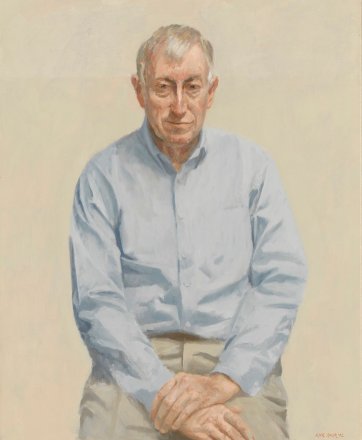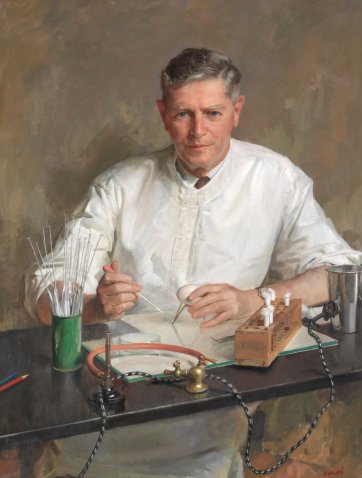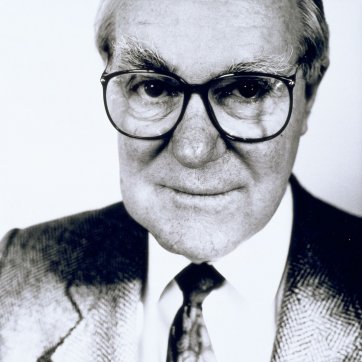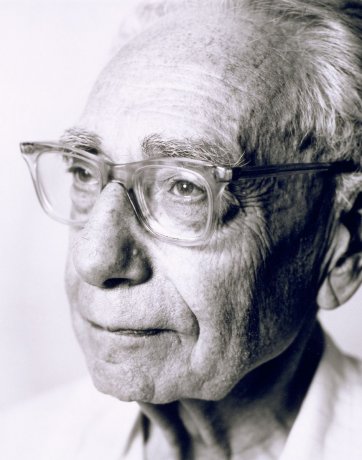
There is no simple answer to the question of how many Australian Nobel laureates there have been. Who's Who in Australia lists 12 'Nobel Prize winners in Australia '; the Nobel Foundation lists 6 laureates who held Australian citizenship when they won the prize. There are 16 men pictured in Australia and the Nobel Prize .
What makes an Australian laureate? Is it being born in Australia , being educated to tertiary level in Australia , living in Australia for some time or carrying out one's prize-winning work in Australia ? The uncertainty is not confined to this country. Anyone who wins a Nobel Prize is quickly claimed by the nations, states, universities, foundations, hospitals and schools with which he or she has been involved. The most famous Nobel prize-winner, Albert Einstein, was claimed by Germany as soon as he won the prize, although he was a Swiss citizen and had been educated in Switzerland ; he is now regularly described as German-American.
Being born in Australia is perhaps not enough in itself to make a winner an Australian Nobel laureate. For example, laser pioneer Aleksandr Prokhorov (Physics, 1964) was born in Queensland , but he left Australia as a seven-year-old and never returned. But the fact that someone was not born here can be quite irrelevant. Patrick White (Literature, 1973) was not born in Australia , he was not educated here, and he said that he did not feel particularly Australian - yet he won the prize 'for an epic and psychological narrative art which has introduced a new continent [ Australia ] into literature'.
A case may be made that education to a professional level in Australia confers an Australian style of approaching problems that persists through later life. It has been common for scientists to leave Australia to study in English universities. Australian born and educated John Cornforth (Chemistry, 1975), Howard Florey (Medicine, 1945) and Lawrence Bragg (Physics, 1915) each followed this path, but each retained an affection for, and perhaps the influence of, the education he received in his native country. William Bragg (Physics, 1915) and, to a lesser extent, Robert Robinson (Chemistry, 1947) can be said to have a significant Australian connection, as each left his mark on the Australian university at which he was employed.
Other Nobel Prize winners could not be claimed as 'true' Australian laureates, but have interesting associations with Australia , in some cases necessitated by international politics or historical developments. These include Bernard Katz (Medicine, 1970), John Harsanyi (Economics, 1994), José Ramos-Horta (Peace, 1996), Rolf Zinkernagel (Medicine, 1996) and John Coetzee (Literature, 2003). German émigré scientist Max Born (Physics, 1954) never lived in Australia , but his granddaughter was to become one of our most famous expatriates - Olivia Newton-John.
There are just three laureates who were born in Australia, educated to tertiary level here, and performed the work for which they were awarded the Nobel Prize in this country. They are Macfarlane Burnet (Physiology or Medicine, 1960), John Eccles (Physiology or Medicine, 1963) and Peter Doherty (Physiology or Medicine, 1996).
Australia and the Nobel Prize has been generously supported by the Embassy of Sweden.