
![]() |
|
| Glossy Techniques | |
| TYPE C PRINT | |
| See
photographs by Polly Borland
Type C photographs are printed from photographic roll film (negatives) onto positive paper. Type C photographs are the most common, cheapest and most convenient colour process available. Your family snapshots are type C prints. The paper comes in rolls or sheets (for smaller sizes). It is available in high gloss right through to matt and is usually plastic based. See photographs by Montalbetti +Campbell The artists have used a large format camera (one which holds a 6"x 7"negative) in order to photograph their subjects. They have manually developed gelatin silver prints in the darkroom, toning the prints with chemical solutions to achieve the desired effect. Each print produced in the darkroom is a one off which is scanned into a computerised printing machine. In this way the photographers are able to make duplicates of unique prints. The computerised machine is used to store and enlarge images and to expose the scanned image onto photosensitive paper. Essentially the colour print process has been taken out of a darkroom and achieved mechanically. This facilitates the production of very large prints while retaining high resolution. Although these prints were made with the use of computers they are very different from Nova-Jet or Iris techniques, which once scanned, do not employ photographic development processes.
|
|
| NOVA-JET PRINT | |
|
See photographs by Derek Henderson See photographs by Hugh Stewart
Derek
Henderson Hugh
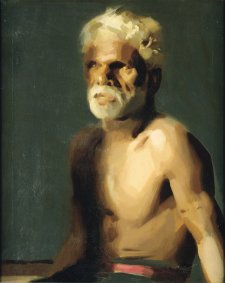
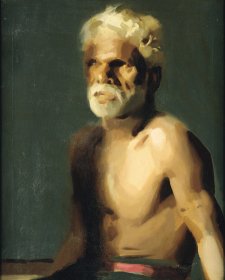
Stewart You will notice a difference between the Hugh Stewart and the Derek Henderson prints. Hendersons work has been through two processes. First the negative was made into a print and then this print was scanned into the computer. With each step the quality of image resolution has degenerated. You may notice that all of these photographs are quite dark compared to the way they are printed in the magazines. Tone and colour can be manipulated after scanning to achieve the effect desired by the photographer.
|
|
| IRIS PRINT (from TYPE C) | |
|
See photographs by Andrew Southham
|
|
| CIBACHROME PRINTS | |
|
Cibachromes are direct positive colour prints made with a transparency (a slide) instead of a negative (type C photograph). They are characterised by rich colour and a highly glossy surface. The paper contains three layers of emulsion. One is sensitive to blue. One is sensitive to red. One is sensitive to yellow. You cannot see these layers with your eye. The process used to develop a cibachrome photograph uses extremely toxic chemicals.
|
|
| TYPE R PRINT | |
|
See photographs Bob Oliver
A type R print is a cibachrome print. Most colour photographic prints are made by enlarging a negative onto paper. A type R print is a photographic print that is made from a slide/transparency. A positive is used instead of a negative.
|
|
| GELATIN SILVER PRINT | |
|
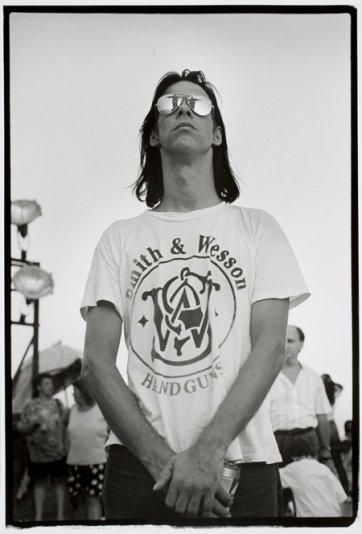
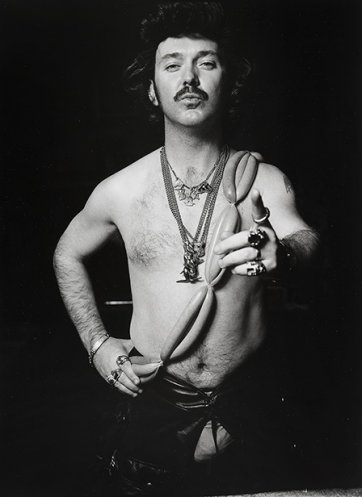
See photographs by Bleddyn Butcher See photographs by Bob Oliver The most common form of printing a black and white photograph in the twentieth century. Printing paper has been coated with a gelatin emulsion containing silver salts. Silver salts are the basis for most black and white photographic imagery because they can easily be treated to become sensitive to light. This paper is exposed to a negative image, usually through projection in an enlarger and brought out using a series of chemical developers and fixers. The paper is available in gloss, pearl, semi-matt and matt. It comes in sheets and on rolls and can be resin coated (plastic) or fibre based. Compared with earlier techniques the gelatin silver print is cheaper and far more easily printed.
|
|
| FIBRE BASED PRINTS | |
|
See photographs by Sage See photographs by Bleddyn Butcher See photographs by Bob Oliver Most paper used for printing gelatin silver photographs is plastic based. Fibre based photographic prints differ in that the paper is literally fibre based instead of plastic based. These types of prints are popular with artists because they are of archival standard and because of the richer tones that can be achieved in printing. During the development process fibre based paper curls up and needs to be flattened in a heated press.
|
|
| TONED PHOTOGRAPHS | |
|
The process requires the photographer to manually agitate a gelatin silver photograph in a chemical solution until the desired effect (tone) is acquired. It is possible to create many different tonal colours including warm browns, blue-blacks, purples, sepias, blues, olives, red-browns and reds. The metals used for these processes are mostly iron, copper, uranium, mercury, platinum, palladium, vanadium, selenium or gold (hence gold toned, platinum print etc.). Photographs can be toned at any stage of the development process (before, during, after). This process is employed by photographers mostly for aesthetic reasons, and with its use it is possible to enhance elements of an image. It has also been used in some instances to increase the stability of the image on the paper (Australian photographer David Moore tones his photographs for durability). The toning process is often unpredictable. Two similar processes can deliver quite varied results.
|
|
| SELENIUM TONED (gelatin silver print) | |
|
See photographs by Sage
|
|
| POLY TONED (gelatin silver print) | |
| See
photographs by Sage
After an image has been developed they are toned in a liquid solution. Final results can range from a pale brown right through to a dark reddish brown depending on how long they are in the solution.
|
|
| GOLD TONED (gelatin silver print) | |
|
See photographs by Sage After an image has been developed onto photographic paper it can be toned with various metal-based solutions. Gold toning alters the overall image colour of a gelatin silver print usually to a purplish-brown.
|
|
| LITH PRINT | |
| See
photographs by Sage (Spike Milligan)
A lith print is made by developing a gelatin silver print in a slightly different chemical bath. These prints are becoming harder to make because most large photographic companies have stopped producing papers that are compatible to the lith developing chemicals. Lith prints often appear textured and with more contrast than a standard gelatin silver photograph. You can download Glossy Techniques as a Microsoft Word document here.
|
|