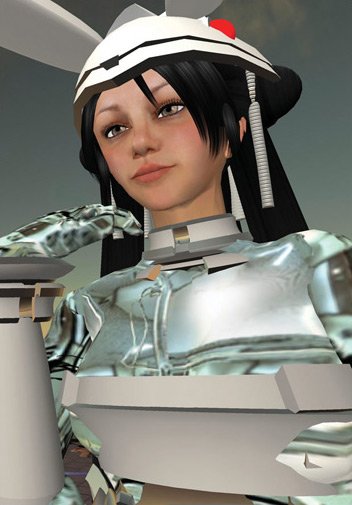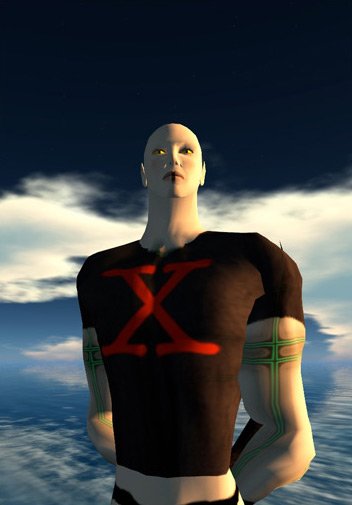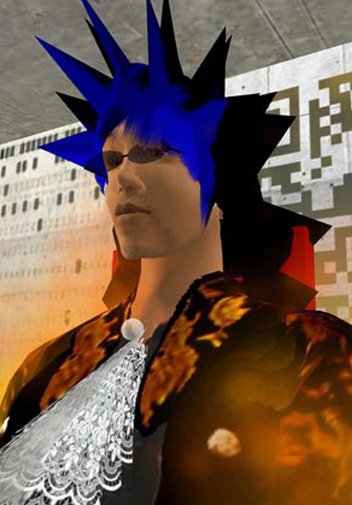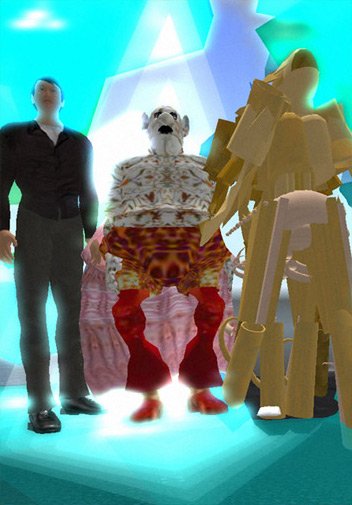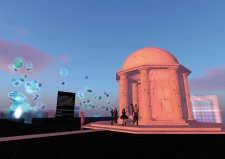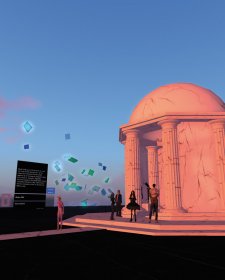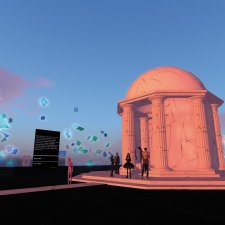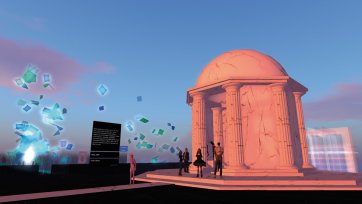
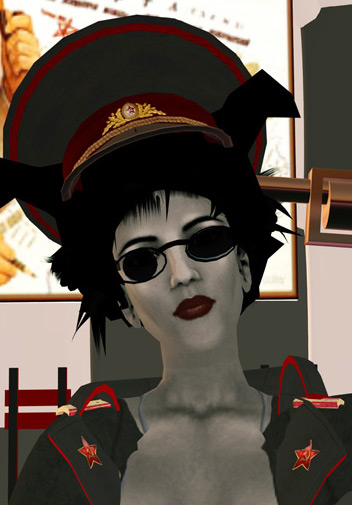
Artist StatementCodePortraits: Pattern Recognition, Icons, Proxies, and Cameos. The representation of a virtual person, or avatar, is a tricky thing. How do you present an image of a 3D character that someone uses in a virtual world like Second Life as a portrait? Because in essence, what you have is a mnemonic for an identity that a person uses in a simulated environment. It's just a code, as avatar artist Gazira Babeli (who claims not to have an operator) makes so clear. The representation of any avatar, or any portrait, for that matter, is just a visual proxy for the person, or the constructed "role" or "character" one has decided to play. This distinction does not matter as long as the code (image) and subject remain analogous. What is important is the place of the code-proxy for the (virtual) subject we're trying to represent. While this may seem a little opaque, it's the core of the rationale for using QR Codes (small 2D barcodes for the transmission of information, including web URLs) in my CodePortraits. The installation consists of 12 codes, displayed alongside a mural of the Last Supper created by the Second Life performance group Second Front. The codes represent members of the group who sat for my Andy Rembrandt's Video Screentests project, along with friends of mine in Second Life. Each represents a special moment in time in my exploration of virtual worlds as an art space, and calls into question how one relates to any symbol. The reason there are two portraits of Lizsolo Mathilde has to do with the development of her avatar over three years. The one on the grey background is representative of her beginnings with Second Front, while the other was taken more recently in 2009. Not only does this represent an evolution of technology, but her settling in as a native of that world and masterfully articulating her identity within it. This is the also illustrated in the videos of Fau Ferdinand, Great Escape, Tran Spire and Bibbe Oh. The CodePortraits featuring my avatar and Gazira Babeli acting as the real-life performance artists Ulay and Marina Abramovic signify the moment we created a flying box containing their Modus Vivendi: Pieta that we sat down next to Eva and Franco Mattes' representation of Imponderabilia during the Performa 2007 Biennial in New York. Since then, we have never used those avatars, and these are particularly rare pieces of footage. The clip of Misa Delight may seem non sequitur, but she is representative of the current state of affairs, as she is a co-artist in the Andy Rembrandt Collective project that I am working on at Eyebeam Atelier in New York. And lastly, the Bettina Tizzy piece is a nod to the concept of the 'patron', as she is a very active voice in the Second Life community. They all represent an emotional moment, and are mnemonic symbols locked in time. The QR code here is an index to a set of memories for me, but also points of discussion between the audience and myself or perhaps the audience and subject, or all three. They are a bar code index to an encylopaedia of experience. This experience is also layered through the incorporation of historical referents that tie into the cultural mythology of art and culture. Using Second Front's Second Supper mural as a central map for the installation draws a powerful set of signifiers into play that have reverberated ever since the creation of the mural in Milan by Da Vinci. Secondly, the reference to Warhol's films of 'people just being themselves' from the 60's, a set of over 400 'screentests' also plays on the ideas of recognition and fame as mythology, as today we can all have 15 minutes of fame on YouTube. In addition, Warhol also performed a rendition of the Last Supper, which is a connective point for me, as he was both devout and obsessed with surface, which may be a good analogy between the precious portrait and the ephemerality of the media image. Both create an exaltation; one of deity, another of the banal. But both of these are somehow legible, either through the lens of religious institutions, the semi-religious institution of the museum, or the everyday observation of the person in everyday life, even if it is an avatar. Each portrait is an identification with a part of someone's experience, and CodePortraits could be said to be an information sculpture of collected experience. One of the more powerful meditations on the memento is the specific use of QR code readers on handheld devices for use in this installation. One important note is that it may be the first to activate content on handheld devices using passive codes in virtual worlds, but what is more important is the gesture of the appearance of the CodePortraits on the screen of a mobile device, in my case, on my iPhone. Seeing the face of Cleo Hultcrantz or Lizsolo Mathilde on my phone reminds me, or I see the pattern of, the cameo. Holding the phone in my hand with the screentest playing serves as a memento of my friend, or also the alternate function of the representation of dignitary, as with the video of Second Life blogger and promoter, Bettina Tizzy. These 'video cameos' serve the purpose of proxy, but the semi-precious form of the iPhone gives the impression of the intimate, such as a jewellery piece or locket. This translation of the memento across platforms as a code serves as a site of memory and recall in an era in which both are becoming increasingly ephemeral. Recognition, memory, and emotional connection are all aspects that layer themselves into the CodePortraits, as they serve as a conduit for the communication and transmission of these symbolic proxies. Even when taken to the most traditional example of the agate cameo of a loved one contrasted with the analogy of the video screentest on an iPhone, humanity encodes, indexes, and associates its affective relations within symbols in all modes of reality, virtual or otherwise. |
![]() ![]() ![]() ![]() ![]() |
|---|